THE TERROR: SEASON 3 (2026) – A Promising Return That Finds Its Sharpest Horror in Human Frailty
Rating: ⭐⭐ 1/2
When The Terror first arrived in 2018, it did so with the cold, remorseless confidence of a series that understood horror as more than a parade of shocks. Its inaugural season, built around the doomed Arctic expedition of the 1800s and loosely tethered to real historical catastrophe, remains one of television’s finest examples of prestige horror: atmospheric, literate, and quietly devastating. The second season, Infamy, shifted the nightmare to a haunted Japanese American community during World War II, but it struggled to reconcile its supernatural ambitions with the already overwhelming historical horror of internment. The result was intriguing but uneven, occasionally suggesting that its monster was less frightening than the reality surrounding it.
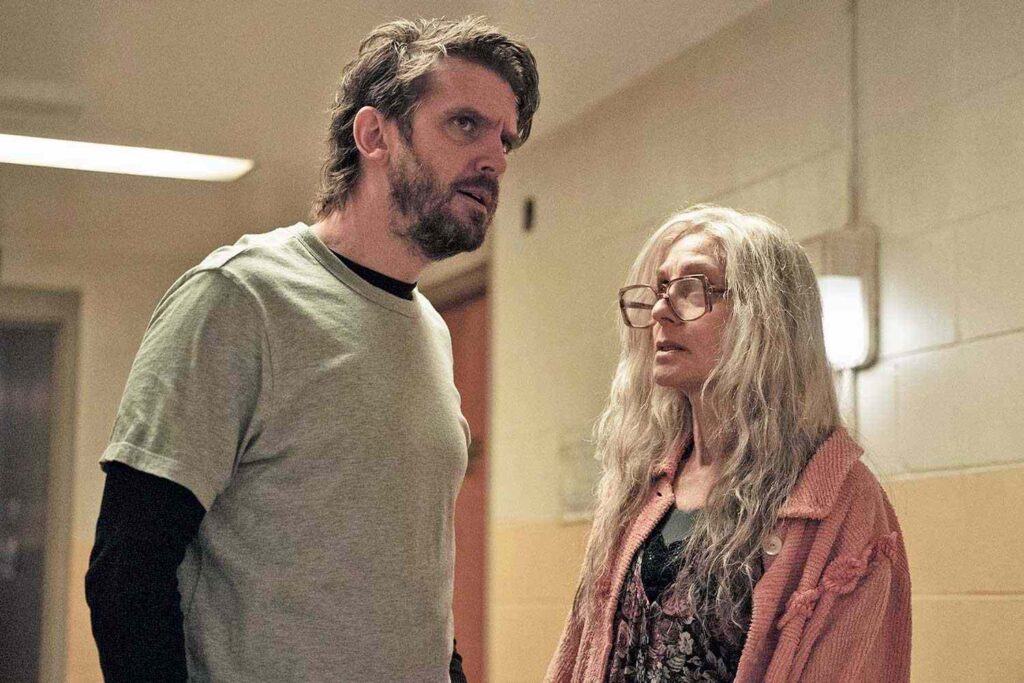
Seven years later, The Terror returns with its third season, Devil in Silver, carrying with it the weight of expectation that comes with a series known for taking horror seriously. This time, however, the setting is not drawn from a historical episode but from the claustrophobic corridors of a psychiatric hospital. At the centre is Pepper, played by Dan Stevens, a working-class man whose brief violent encounter with police lands him inside an institution that seems designed less to heal than to swallow people whole. Over six episodes, Pepper discovers that the hospital’s rot is not merely bureaucratic or medical, but possibly supernatural, and his fight to escape becomes a descent into a place where sanity, cruelty, and myth blur into one another.
Devil in Silver inevitably invites comparison with One Flew Over the Cuckoo’s Nest, not least because any story set within the oppressive machinery of a mental institution must reckon with that film’s long shadow. Yet Stevens is not Jack Nicholson, and the season does not possess an antagonist as indelible as Louise Fletcher’s Nurse Ratched. Rather than grounding its horror entirely in the indignities and abuses of institutional life, the season leans once again into the language of the supernatural. Whether that choice deepens or dilutes the material is debatable. The real-life terrors of an underfunded, understaffed, and dehumanising psychiatric system are potent enough on their own, but The Terror has always been most comfortable when historical or psychological dread is given a monstrous face.
For all its admirable seriousness, this is sadly the weakest entry in the anthology so far. Still, that criticism comes with an important caveat: even diminished, The Terror remains more thoughtful than most horror television. It resists camp, avoids becoming a mere gore machine, and continues to treat fear as something rooted in character, place, and moral decay. Stevens gives Pepper a bruised, restless humanity, making him sympathetic without sanding down his rougher edges. Then again, Dan Stevens has a habit of being quietly excellent in almost anything he ventures into, bringing intelligence and curiosity even to material that does not always rise to meet him. The real revelation, however, is relative unknown, Judith Light as Dorry, one of the hospital’s inmates. Her performance is raw, lucid, and unexpectedly moving, and she brilliantly and convincingly portrays both the younger and older versions of Dorry without making you realise it is the same person acting here. Rather than playing “madness” as a collection of tics, Light locates the tenderness and abandoned dignity of a woman wounded long before the hospital claimed her.
In the end, Devil in Silver is not a complete washout so much as a fascinating disappointment: handsomely made, sincerely performed, and thematically rich, yet never quite as chilling or cohesive as the series at its best. Its finest moments suggest the show still has plenty of life left in its bones, especially when it allows human vulnerability to be as frightening as any creature lurking in the dark. If another season does come, one hopes the wait will be shorter than seven years—and that the next nightmare will cut a little deeper.