SILO (SEASON 3) (2026) – The Mystery Runs Deeper in a Gripping Season
Rating: ⭐⭐⭐
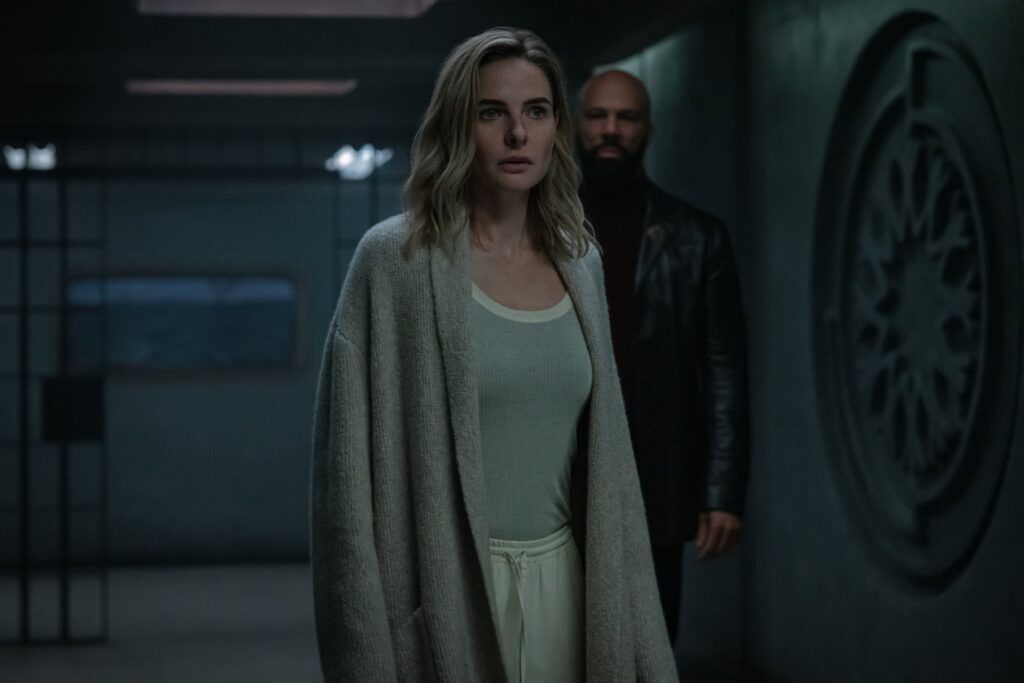
Fans of science fiction should rejoice. Apple TV+ has been consistently coming up with some mind-boggling science fiction tales, and SILO is a prime example of serious science fiction translated into a television adaptation that feels every bit as intriguing and compelling as the genre should be.
Based on the acclaimed trilogy of novels by Hugh Howey — Wool, Shift and Dust — SILO is a carefully constructed saga whose television adaptation has so far remained remarkably faithful to the spirit of its source material. Seasons 1 and 2 largely draw from Wool, the first book in the trilogy, while Season 3 moves predominantly into the territory of Shift, the second and arguably more expansive book. This shift in source material also helps explain the season’s markedly different narrative structure and its exploration of events taking place across different timelines.
The first season, which premiered in 2023, introduced us to a post-apocalyptic world where humanity appears to have been reduced to mere survival inside massive, multi-level underground bunkers known as SILOs. These self-contained societies have been led to believe that the outside world is toxic and uninhabitable, keeping their inhabitants underground and under the control of a rigid judicial system. At the centre of it all is Juliette, a smart, unorthodox mechanical engineer who dares to question the system. Her curiosity sets off a chain of events that begins to awaken an entire population to the possibility that everything they have been told about their existence may be a lie.
The plot thickened considerably in Season 2, when Juliette successfully ventured outside the so-called SILO, only to discover the existence of other SILOs. This revelation opened up an entirely new set of questions about the true purpose of these underground societies and the ulterior motives behind the system governing them.
Season 3 finally begins to address many of those long-standing questions, while inevitably raising several new ones along the way. In fact, I would say that this is so far the best season of SILO. While Seasons 1 and 2 were undeniably intriguing, they often felt frustratingly like extended teases, deliberately feeding us tantalising clues while leaving many of the biggest questions unanswered. Just when we thought we were getting closer to the truth, another mystery would emerge. Season 3 is considerably more satisfying because it finally starts connecting the dots and providing answers to many of the questions that have been hanging over the series since its beginning. There are, of course, plenty of new questions along the way, but this time the revelations feel like genuine progress rather than simply another tease.
What also makes this season particularly interesting is its very different narrative structure. The story unfolds across two parallel timelines, seemingly separate at first, before the two strands gradually converge and ultimately merge in a dramatically satisfying finale. It is a storytelling device that could easily have become confusing, but SILO manages to keep the narrative focused and purposeful. More importantly, the two timelines gradually reveal how the events we have been following are connected, giving the larger mythology of the series a much greater sense of scale and purpose.
Rebecca Ferguson, who seems incapable of giving a bad performance, once again demonstrates her formidable screen presence as Juliette. She gives the character both intelligence and determination, while also conveying the emotional burden of someone who has spent years challenging a system far more powerful than herself. She is surrounded by a strong supporting cast of characters, each playing a part in helping to unravel the increasingly complex mystery of the SILOs.
Tim Robbins is particularly effective as Bernard Holland, the powerful and seemingly ruthless head of the SILO. His character has undergone one of the more dramatic arcs throughout the series, and Robbins handles that transformation with considerable subtlety and conviction. Bernard is no longer simply the authoritarian figure we were introduced to earlier in the series; there are far more layers to his character than initially apparent.
Season 3’s parallel storyline, set in the period following the apocalypse, introduces another fascinating dimension to the mythology. It focuses on Daniel, a congressman who becomes deeply entangled in what appears to be a global conspiracy surrounding the origins of the SILOs. Along with investigative journalist Helen Drew, he begins digging into the mystery, only to find themselves increasingly caught in a carefully constructed web of deception and manipulation.
Ashley Zukerman and Jessica Henwick make a terrific duo as Daniel and Helen. Their chemistry and appealing screen presence make their investigation especially engaging, drawing us into their increasingly dangerous search for the truth. Their storyline also provides an intriguing contrast to Juliette’s struggle within the SILO, while gradually revealing how the two narratives are connected.
As the season races towards its explosive conclusion, SILO once again leaves us wanting more. The finale provides some answers, but rather than neatly tying everything up, it deliberately opens the door to the final chapter. The tantalising teaser glimpses of what awaits in Season 4 only heighten the anticipation and make the wait even more frustrating.
Unfortunately, we now have to wait another year to find out how it all ends. But if Season 3 is anything to go by, the final descent into the mystery of the SILOs should be well worth the wait.