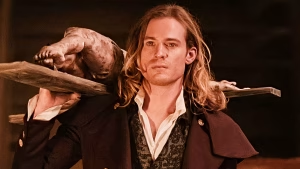
MONSTER: THE LIZZIE BORDEN STORY (2026) – Who Is the Real Monster? A Bold but Uneven Retelling of the Lizzie Borden Story
Rating: ⭐⭐⭐
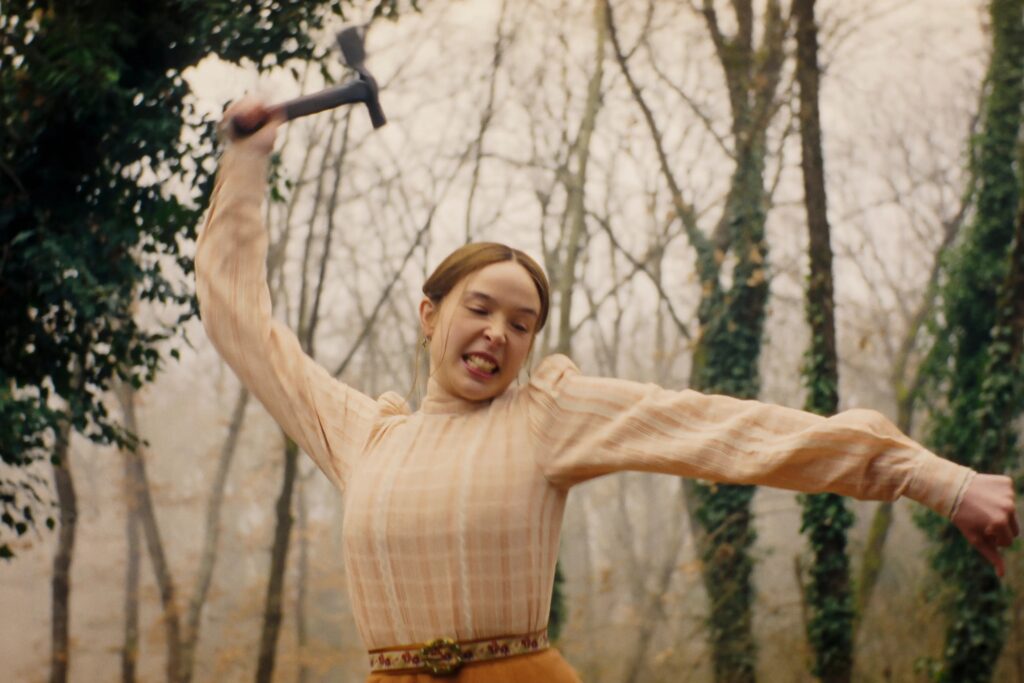
The fourth season of Ryan Murphy’s true-crime anthology series Monster turns its attention to Lizzie Borden, the infamous American woman accused of the brutal murders of her father and stepmother in their home in the late 19th century. As with the second season, which explored the case of the Menendez brothers, the series once again blurs the line between victim and perpetrator, challenging us to reconsider who the real monster is in the story.
While the nature and brutality of the murders were undeniably monstrous, the series also sheds light on the cruelty inflicted by Lizzie’s father and stepmother within the household. Their oppressive and abusive behaviour paints a picture of a deeply troubled domestic environment in which Lizzie and her sister were subjected to relentless bullying and torment. The question that inevitably arises is how much psychological suffering a person can endure before reaching breaking point. As portrayed by Ella Beatty, Lizzie possesses many admirable and seemingly pure qualities, making her appear more a victim of circumstance than the monster her notoriety suggests. Yet, whether she was guilty of the crimes or not, her name has become indelibly associated with the killings, securing her place in the annals of infamous criminal history and making her a recurring subject of documentaries and film adaptations.
As with its predecessors, this latest season is a polished production that takes considerable creative liberties in how the story is presented. The series’ willingness to experiment with unconventional storytelling is one of its greatest strengths, alongside its consistent ability to draw compelling performances from its cast. Sometimes these creative choices work brilliantly; at other times, they feel less successful. Nevertheless, there is rarely a dull moment when the series ventures beyond conventional storytelling, offering fresh and unexpected perspectives on familiar true-crime material.
Unfortunately, The Lizzie Borden Story does not always strike the right balance. Its pacing feels uneven, shifting between stretches of rapid storytelling and sequences that are unnecessarily prolonged, particularly in the later episodes. What initially feels like a deliberate attempt to explore the characters and their psychological complexities eventually begins to feel repetitive, as though the narrative is being stretched to fill its eight-episode run. The series also moves rather erratically between different genres and tones. At times, it plays like a dark comedy; at others, it resembles a slasher film before morphing into a courtroom drama. While this genre-hopping can be intriguing, it occasionally undermines the coherence of the overall narrative.
Ironically, it is the courtroom proceedings in the later episodes that prove to be among the season’s most compelling moments. Here, Ella Beatty truly comes into her own, delivering a remarkable performance that captures the complexities and contradictions of Lizzie’s character. She brings a fascinating mixture of vulnerability, defiance and emotional intensity to the role, making Lizzie an increasingly intriguing figure to watch. These courtroom sequences also provide a welcome shift in focus, allowing the drama to concentrate on the case itself and the questions surrounding Lizzie’s guilt, rather than becoming distracted by the series’ more elaborate creative flourishes.
Another interesting storytelling device is the introduction of a parallel narrative involving Aileen Wuornos, the real-life female serial killer whose crimes took place in the late 20th century. The connection between the two women is established through Aileen’s fascination with Lizzie Borden’s story, which becomes a source of inspiration for her own violent actions. It is an intriguing premise that creates a thematic link between two women separated by almost a century, inviting us to consider how notorious figures from the past can influence those who come after them.
Sarah Paulson, one of Ryan Murphy’s frequent collaborators, is cast as Wuornos and once again delivers a distinctive performance in a role that is deliberately far removed from conventional likability. As a deeply troubled and unsettling character, Wuornos is not someone the audience is necessarily expected to sympathise with. Yet Paulson commands attention whenever she appears on screen, drawing us into her character’s disturbing world and making us curious about just how far her increasingly erratic behaviour will go. It is another striking performance from an actress who has repeatedly demonstrated her willingness to embrace challenging and unconventional roles.
Through flashbacks, hallucinations and extended monologues, the series attempts to take us inside the minds of its two protagonists, offering glimpses into their personal struggles and their respective battles with the worlds they inhabit. These sequences are among the show’s more ambitious creative choices, providing psychological context that a straightforward retelling of the crimes might otherwise lack. However, the constant switching between Lizzie’s story and Aileen’s sometimes makes the narrative feel choppy, disrupting the momentum of both storylines. Although the parallels between the two women are clear enough, the execution does not always allow their stories to develop as cohesively as they might have.
The final scene, which brings the two narratives together in an unexpected manner, is perhaps the season’s boldest creative gamble. It is certainly provocative, but its execution feels morally and tonally questionable, and is likely to prove divisive among viewers. Rather than delivering a satisfying culmination of the themes explored throughout the season, it risks becoming a distraction that draws attention to the filmmakers’ desire to shock rather than to deepen our understanding of the characters.
Ultimately, Monster: The Lizzie Borden Story remains an interesting but uneven addition to the anthology. There is much to admire here, but the series’ creative ambitions do not always translate into effective storytelling, leaving us with a season that is intriguing and thought-provoking, yet ultimately falls short of being truly exceptional.