ODYSSEY (2026) – Nolan’s Odyssey Turns Ancient Myth into a Thunderous, Human IMAX Epic
Rating: ⭐⭐⭐⭐
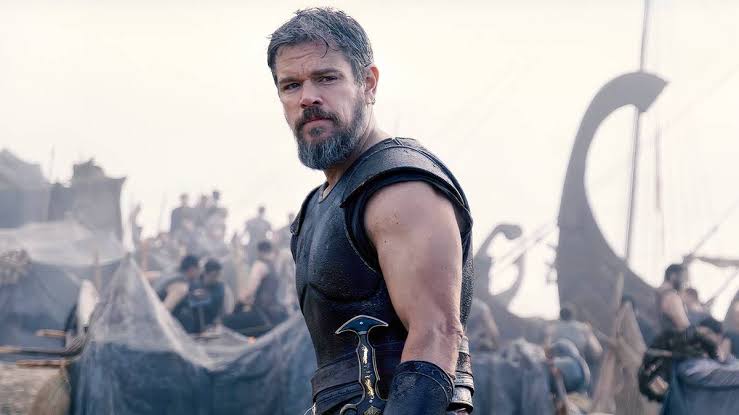
Christopher Nolan’s Odyssey may be the most audacious undertaking of his career: a thunderous, prestige-sized blockbuster that treats myth not as dusty homework, but as cinema’s oldest form of spectacle. Drawing from Homer’s nearly 2,800-year-old Greek epic, the film follows Odysseus, the war-weary king of Ithaca, as he struggles through a decade-long voyage home after the Trojan War. What might have become an overstuffed literary translation instead emerges as a sweeping three-hour odyssey in the truest sense: grand, strange, violent, melancholy, and surprisingly human.
The film’s visual design is central to its interpretive force. In IMAX, its oceans, battlefields, and exposed landscapes acquire a monumental quality, positioning the natural world as an active pressure upon the characters rather than a passive setting. Nolan’s emphasis on physical scale gives the myth a material weight, while the performances provide a necessary counterbalance to the film’s epic dimensions. Tom Holland, Matt Damon, and Robert Pattinson offer the most distinctive work, each articulating a different emotional register within the narrative’s broader heroic framework. The much-discussed casting choices, including Lupita Nyong’o as Helen of Troy and Elliot Page as a Greek warrior, remain relatively peripheral to the film’s overall structure.
The film is most compelling in its thematic treatment of atonement, honour, homesickness, and the psychological aftermath of war. Beneath its encounters with monsters, gods, and supernatural trials, Odyssey is fundamentally concerned with the difficulty of ethical return: the problem of whether a person shaped by violence can recover a coherent sense of self. Nolan’s use of accessible modern language makes these ideas emotionally immediate, even as the episodic structure preserves the variety and instability of the Homeric journey. The result is a film that frames homecoming not simply as a geographical destination, but as a moral and existential process.
Odyssey may not be Christopher Nolan’s greatest film, but it is easily among his most watchable in recent years and, for me, the best film of the year so far. Where Oppenheimer was densely cerebral and Tenet sometimes felt like a puzzle box locked from the inside, Odyssey restores a more direct sense of cinematic wonder. It is intelligent without becoming airless, enormous without becoming empty, and serious without forgetting the pleasures of adventure. Its critical and commercial success suggests that Nolan’s position at the summit of mainstream filmmaking remains secure. At this point, every new Nolan film is not merely released; it arrives, with the ceremonial force of an event. Odyssey earns that treatment.