DISCLOSURE DAY (2026) – Spielberg Reaches for the Stars but Lands in the Ditch
Rating: ⭐⭐
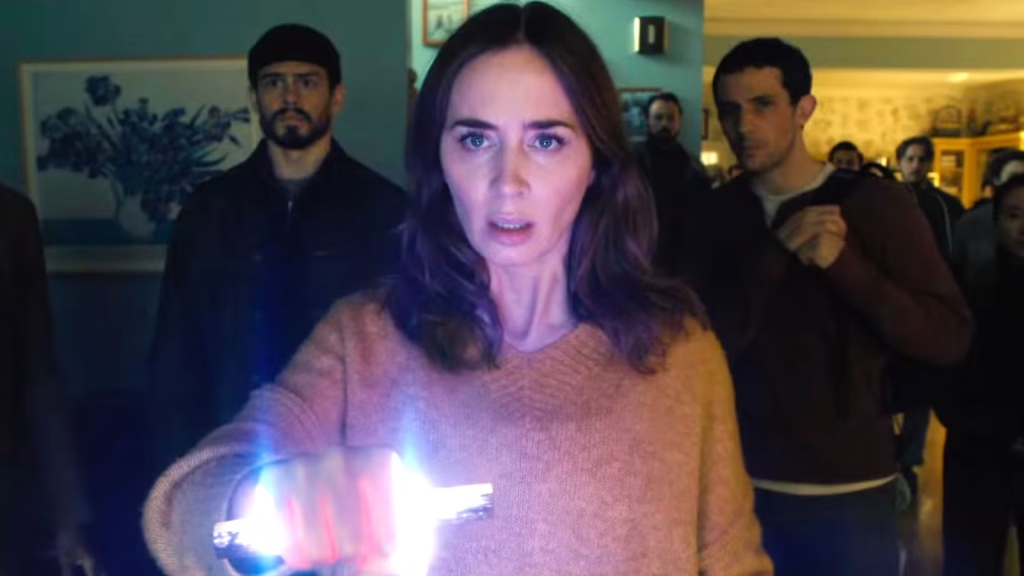
Disclosure Day arrives burdened with the kind of expectations that only a Steven Spielberg summer spectacle can attract. Billed as his grand return to science fiction—and, more specifically, to the awe-struck terrain of alien encounters—it invites immediate comparison with the director’s own towering landmarks, E.T. and Close Encounters of the Third Kind. The ingredients certainly suggest an event: an impressive cast led by Emily Blunt, Josh O’Connor, Colin Firth, Wyatt Russell and Colman Domingo, and the return of John Williams, whose music has helped define some of Spielberg’s most enduring cinematic memories.
That pedigree makes the disappointment sting all the more. For a film that appears so determined to summon wonder, Disclosure Day too often settles for confusion. The plot is riddled with holes and rescued repeatedly by convenient bursts of almost magical logic, as if the screenplay keeps discovering escape hatches only after trapping itself in corners. The characters, meanwhile, are sketched so thinly that they rarely resemble actual people with fears, motives or inner lives. By the time the final act arrives, the film has piled up so many implausibilities that caring about the outcome becomes less an emotional response than an act of endurance.
Even the craft, usually Spielberg’s safest harbour, proves strangely uneven. Some of the effects feel below the standard one would expect from a production of this calibre. A scene involving deers, foxes and other animals wandering into a room should feel uncanny or miraculous; instead, it looks distractingly artificial, the sort of moment that pulls the viewer out of the movie rather than deeper into its spell. Most baffling of all is the ending, where the film seems poised to deliver its grand revelation, only to retreat into coy ambiguity. After an alien whispers to the protagonists, Emily Blunt’s television weather reporter steps before the cameras with what appears to be a message of immense importance—only for the film to leave us with silence where meaning should have been.
There are flashes of the old Spielberg pulse, particularly in a handful of well-choreographed chase sequences that briefly jolt the film awake. But they are too scattered to rescue the whole enterprise. Williams’s score, surprisingly, leaves little lasting impression, functioning more as background atmosphere than emotional architecture. In the end, Disclosure Day looks and sounds like a film with something profound to say about humanity, contact and cosmic mystery—but when the moment comes, it has very little to disclose. I am giving the film a generous two stars, and even that feels less like a reward for what is on screen than a gesture of respect for Spielberg’s extraordinary legacy. Better, perhaps, to remember Spielberg and Williams by the classics that once made the impossible feel intimate, and let this misfire drift quietly into the far reaches of memory.